




Salary Structure…
Streamline payroll…

Expense Management Breaks Down When Receipts Are Not Controlled
January 23, 2026
Simplify Every Review Cycle with a Smarter Performance Management Platform
February 5, 2026Expense Management Breaks Down When Receipts Are Not Controlled
January 23, 2026Simplify Every Review Cycle with a Smarter Performance Management Platform
February 5, 2026
Enterprises today manage a diverse and complex portfolio of assets critical to operations, finance, and strategic decision-making. These include physical assets, digital assets, financial assets, and elements of human capital management. Each asset carries operational responsibilities, financial value, and compliance obligations, making enterprise asset management essential for organizational success.
As organizations expand across departments, business units, and geographies, asset information often becomes fragmented. Disconnected spreadsheets, legacy databases, and departmental silos reduce asset visibility, hinder operational workflows, and increase the risk of financial misreporting and compliance issues.
Without a centralized system, enterprises struggle to answer critical questions:
These visibility gaps compromise operational efficiency, financial optimization, and risk management. Centralizing all asset information into a single system of centralized asset records ensures strategic asset management, real-time decision-making, and proactive oversight of enterprise resources.
Enterprise assets span multiple categories, each with distinct management requirements:
Fragmented management of these assets leads to inefficiencies, missed opportunities, and poor asset lifecycle management. Implementing centralized asset records ensures consistent tracking, accountability, and alignment with enterprise goals.
Fragmented asset records impact enterprise operations and strategic workflows:
Even when departments manage assets locally, enterprises face inefficiencies without asset consolidation and a unified inventory framework.
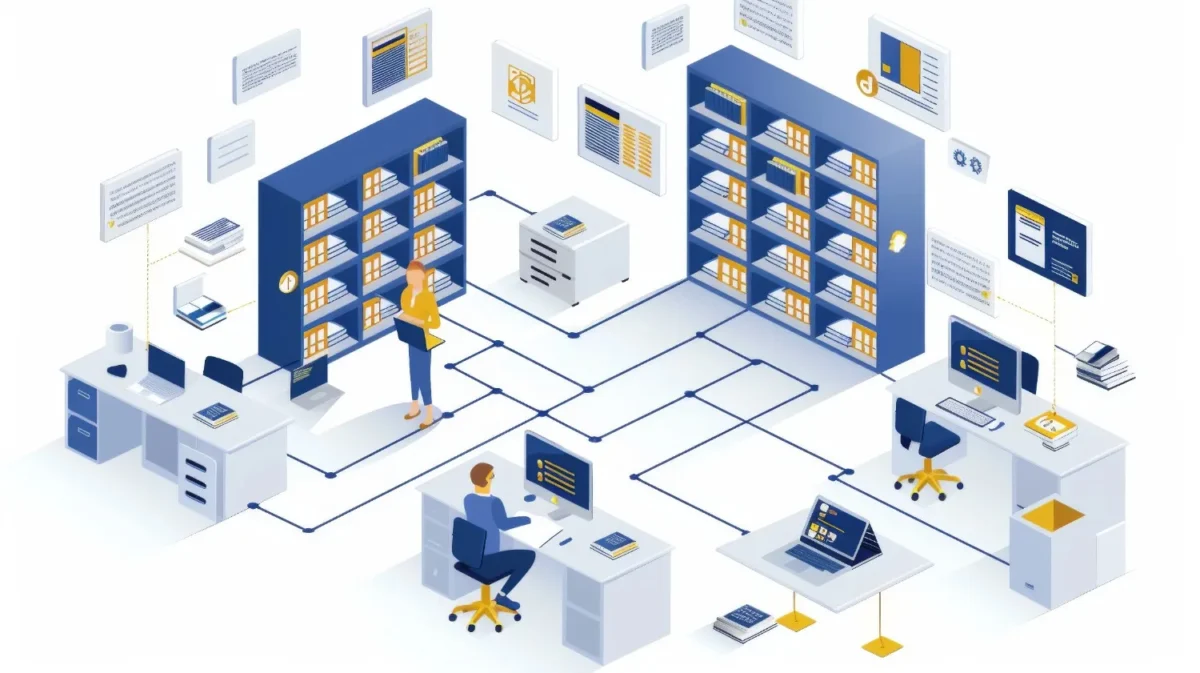
Incomplete asset visibility affects both financial control and strategic planning:
Complete asset visibility enables organizations to control costs, optimize utilization, and make strategic asset management decisions with confidence.
An effective system for enterprise asset management offers:
Centralized enterprise asset management drives operational improvements:
Achieving enterprise-wide asset visibility requires more than just a platform; it demands a structured, stepwise approach that addresses operational, financial, and compliance challenges.
Begin by conducting a thorough inventory of all physical, digital, financial, and human assets. Map inconsistencies, identify duplicate entries, and note missing or outdated records.
Merge disparate records into a single repository and enforce standardized naming conventions, asset categories, and documentation protocols.
Assign asset ownership, define team responsibilities, and create audit trails to enforce accountability.
Connect finance, IT, HR, and operations systems to enable enterprise-wide visibility.
Use dashboards and analytics to track asset utilization, lifecycle performance, and condition. Continuous monitoring allows enterprises to identify underutilized assets, forecast maintenance needs, and optimize replacement schedules.
This stepwise process ensures that organizations transition from fragmented, reactive management to centralized, proactive oversight, aligning operational activity with long-term enterprise strategy.

Centralized visibility is not merely an operational tool—it directly enhances enterprise strategy, financial control, and risk management.
In today’s complex enterprise environments, effective asset management goes beyond policies and manual processes. Organizations need a intelligent asset platform that delivers real-time visibility, control, and optimization across their entire asset ecosystem. This is designed to meet this need empowering enterprises to manage assets efficiently, accurately, and at scale.
IVPHUB brings together automation, integration, and advanced analytics into a single enterprise-grade solution, ensuring complete transparency across thousands of assets, locations, and departments.
Real-Time Asset Dashboards
Gain instant visibility into asset location, status, utilization, and condition across your organization—anytime, anywhere.
Automated Workflows
Streamline asset lifecycle processes such as maintenance scheduling, approvals, transfers, and updates, reducing manual effort and operational delays.
Advanced Analytics & Reporting
Generate data-driven insights to improve operational efficiency, ensure financial accuracy, and maintain audit and compliance readiness.
Enterprise Scalability
As your organization grows, IVPHUB seamlessly supports new asset categories, business units, locations, and regulatory requirements without losing control or visibility.
By centralizing asset management within IVPHUB, enterprises unlock tangible business benefits:
Operational Efficiency
Faster asset discovery, automated maintenance, and improved cross-team collaboration reduce downtime and bottlenecks.
Financial Optimization
Minimize redundant purchases, optimize CapEx and OpEx, and enhance the accuracy of asset-related financial reporting.
Compliance & Audit Readiness
Standardized asset records and documentation simplify audits and ensure adherence to regulatory standards.
Strategic Decision-Making
Real-time utilization insights enable smarter resource allocation, long-term planning, and data-backed growth strategies.
Even incremental improvements in asset visibility through IVPHUB can free up capital, boost productivity, and eliminate operational inefficiencies driving measurable value across the enterprise.
Fragmented asset records create inefficiencies, financial inaccuracies, and compliance risks across the enterprise. Achieving complete asset visibility requires a combination of centralized processes, governance, integration, and enterprise-grade platforms.
With centralized asset management:
Complete asset visibility is not a luxury it is a strategic capability. Enterprises that consolidate physical assets, digital assets, financial assets, and human capital transform scattered resources into strategic assets, enabling better decision-making, operational optimization, risk mitigation, and sustainable growth.
Asset management is the process of tracking and managing company assets in one system. It helps organizations know what assets they have and how they are used.
Asset visibility helps teams see where assets are and who is using them. Without it, assets are often lost, unused, or bought again unnecessarily
Centralized asset records keep all asset information in one place. This avoids spreadsheets and disconnected tools across teams.
Organizations should track physical, digital, financial, and employee-related assets. Tracking all asset types gives a complete view of resources.
It helps teams find assets faster and plan maintenance on time. This reduces delays and operational confusion.
Asset tracking keeps records updated and easy to verify. This makes audits faster and reduces compliance issues.
Asset lifecycle management follows an asset from purchase to retirement. It helps control costs and avoid unexpected replacements.
Using one system removes data gaps and manual tracking. It helps organizations stay organized as they grow.