


Ensure Seamless…
Manage employee…

Empower Employees with Smart Helpdesk Ticketing and Issue Tracking
May 22, 2026
Enhancing Workforce Analytics Daily Using Smart Attendance Reporting System
May 29, 2026Empower Employees with Smart Helpdesk Ticketing and Issue Tracking
May 22, 2026Enhancing Workforce Analytics Daily Using Smart Attendance Reporting System
May 29, 2026
Most companies treat onboarding as a checklist. Documents get shared, tools are introduced, and policies are explained. Then the employee is expected to “figure things out.”
This approach slows teams down.
A scalable employee onboarding system does something very different. It builds clarity, confidence, and capability from the start, and when supported by Onboarding process optimization, it turns new hires into contributors faster and aligns them with how the business operates.
If your goal is to build high-impact teams, onboarding is not a support function. It is a growth engine.
Scalable employee onboarding systems are structured frameworks that deliver a consistent, repeatable, and high-quality onboarding experience across the organization.
They are built to:
Unlike traditional onboarding, these systems do not rely on individuals. They rely on processes, documentation, and feedback loops.
The result is simple: every new hire gets the same strong foundation, often guided by a structured new hire onboarding framework that ensures clarity and alignment from day one.
High-impact teams do not form by chance. They are built through alignment, clarity, and fast execution.
Onboarding shapes all three.
During the first few weeks, new hires learn:
A strong onboarding system, when aligned with a clear Talent onboarding strategy, sets these standards early. It removes confusion and builds momentum.
When every new hire starts with clarity, teams spend less time correcting mistakes and more time creating results.
Traditional onboarding often fails when companies start growing.
Here’s why:
This creates delays. Employees take longer to contribute. Teams repeat the same explanations again and again.
Without a scalable system, onboarding becomes a bottleneck, especially when there is no clear Onboarding process optimization to support growth.
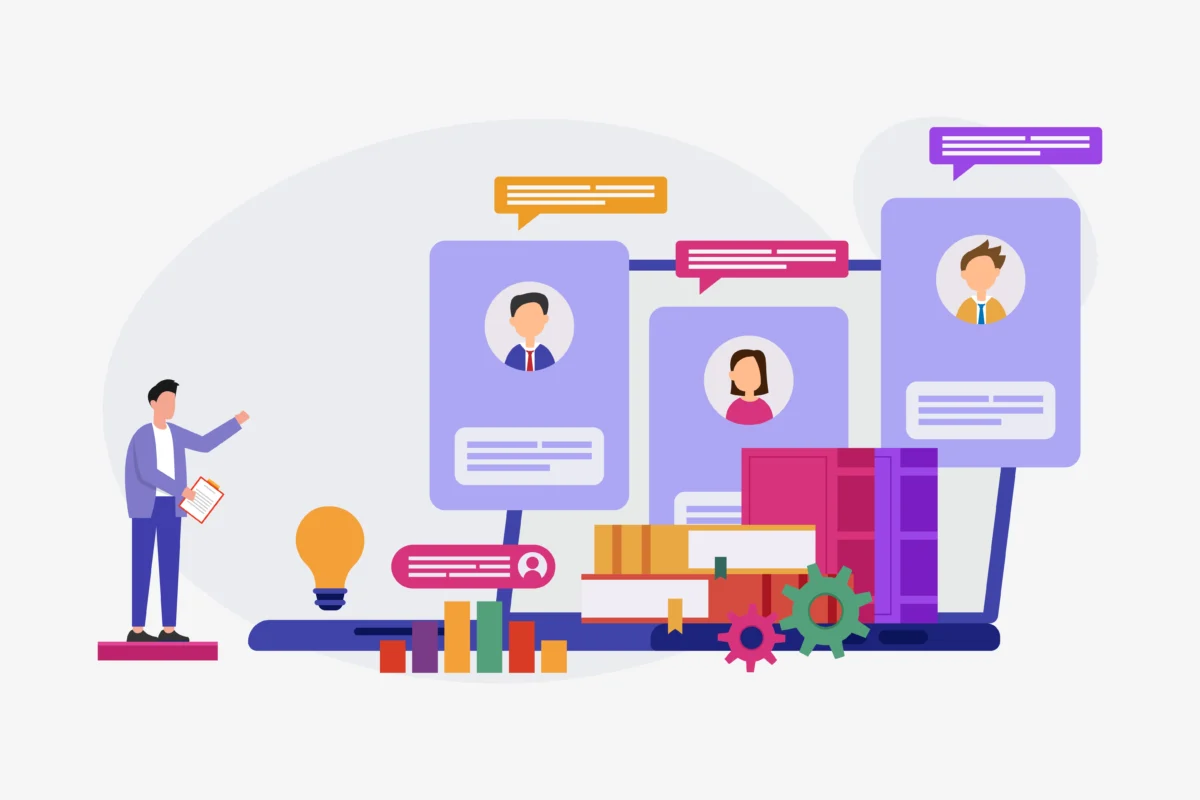
A strong onboarding system is built in layers. Each layer serves a clear purpose.
This layer gives every employee a shared understanding of the business.
It includes:
Without this, employees work without alignment.
This layer focuses on what the employee needs to do.
It includes:
This removes guesswork and sets clear expectations, especially when supported by a strong Role-based onboarding structure.
People learn faster when they work on real tasks.
This layer includes:
It shifts onboarding from passive learning to active contribution.
This layer ensures ongoing growth.
It includes:
This is where onboarding turns into performance, often strengthened by well-designed Employee feedback systems.
Speed matters. The faster employees contribute, the faster teams move.
To improve speed:
This approach reduces overwhelm and increases focus.
Fast onboarding is not about rushing. It is about removing friction.
A scalable onboarding system behaves like a product.
It is designed, tested, and improved over time.
Key elements include:
The most important part is feedback.
Every new hire provides insight into what works and what does not, especially when supported by modern HR onboarding software that tracks and improves experiences.
Managers play a critical role in onboarding success.
Even the best system fails without active manager involvement.
Managers should:
When managers lead onboarding, employees gain context faster. This leads to better decisions and stronger performance.
A scalable system must be consistent, but it should not feel rigid.
Different roles require different onboarding paths.
To balance both:
Personalization should be structured, not random. This ensures quality without losing efficiency, especially when driven by a clear Talent onboarding strategy.
Technology helps streamline onboarding, but it is not the solution by itself.
Useful tools include:
The goal is to reduce manual effort.
Human interaction still matters. Conversations, feedback, and mentorship cannot be replaced, even when using advanced HR onboarding software.
To improve onboarding, you need to measure it.
Focus on metrics that reflect real impact:
Leading Indicators
Lagging Indicators
System Metrics
These insights become powerful when tracked through clear Employee onboarding metrics.
Many onboarding systems fail due to simple mistakes.
Avoid these:
A scalable system evolves. It does not stay fixed, and strong Employee feedback systems help identify gaps early.
A scalable employee onboarding system requires structure, consistency, and automation to ensure new hires become productive quickly without depending on scattered processes or manual coordination. IVPHUB supports this need by bringing onboarding, employee management, and workflow execution into a unified system that improves clarity across every stage of the employee journey.
Centralizes Scattered Onboarding Processes
Many organizations lose efficiency because onboarding steps are spread across emails, spreadsheets, and disconnected tools. This platform brings everything into a single structured flow, ensuring every new hire follows a clear and consistent onboarding path without confusion or missed steps.
Supports Role-Based Onboarding at Scale
Different roles require different learning paths, but managing this manually often leads to inconsistency. Role-based onboarding helps standardize these variations by allowing organizations to design tailored onboarding journeys based on responsibilities while still maintaining a unified system structure.
Automates Repetitive HR Workflows
Manual onboarding tasks slow down the entire process and increase dependency on HR teams. Automation helps streamline document handling, approvals, and task assignments, allowing teams to focus more on strategic onboarding activities rather than repetitive administrative work.
Provides Real-Time Onboarding Visibility
Without proper tracking, onboarding progress becomes unclear for both managers and HR teams. Real-time visibility ensures that every stakeholder can monitor employee progress, identify delays early, and provide timely support to new hires when needed.
Strengthens Feedback-Driven Improvement
Onboarding systems often remain static due to a lack of structured feedback. Integrated feedback mechanisms allow organizations to capture insights from new employees and continuously refine onboarding processes based on actual experience rather than assumptions.
Improves Measurement Through Onboarding Metrics
Measuring onboarding success is essential for long-term improvement. Tracking key indicators such as task completion, readiness levels, and engagement helps organizations understand how effectively new hires are adapting and contributing to the team.
Helps Reduce Early Employee Attrition
Weak onboarding experiences often lead to confusion, disengagement, and early exits. A structured onboarding approach improves clarity, confidence, and alignment, which directly supports better retention and helps reduce employee turnover in the early stages of employment.
Hiring great people is only the first step. What matters next is how quickly they become effective.
Scalable employee onboarding systems remove confusion, build alignment, and accelerate performance. They turn individuals into contributors and groups into high-impact teams.
Improve onboarding efficiency with a system designed to reduce delays and improve role readiness. Connect to us to learn how our solution can streamline your onboarding operations.
When onboarding is done right, growth becomes easier, faster, and more predictable, and organizations can effectively Reduce employee turnover while scaling performance.
What is a scalable employee onboarding system?
A scalable onboarding system is a structured process that standardizes how new hires are trained and integrated across teams. It ensures consistency and speed even when hiring volume increases.
Why is onboarding important for high-impact teams?
Onboarding sets early clarity on roles, expectations, and workflows, which directly impacts execution speed. Strong onboarding reduces confusion and builds alignment from day one.
How does onboarding affect employee performance?
Well-designed onboarding shortens the time it takes for employees to become productive contributors. It removes uncertainty and helps them focus on meaningful work faster.
What makes onboarding scalable?
Scalability comes from structured workflows, documentation, and repeatable processes. It ensures every new hire receives the same quality experience regardless of team size.
What is the role of managers in onboarding?
Managers provide context, set expectations, and guide early execution. Their involvement ensures onboarding is not just informational but performance-driven.
How does role-based onboarding improve results?
Role-based onboarding aligns training with specific job responsibilities instead of generic content. This helps employees become effective in their exact function faster.
Why do onboarding systems fail in growing companies?
They fail due to lack of structure, inconsistent delivery, and dependency on individuals. Without a system, onboarding becomes slow and unpredictable.
How does onboarding improve employee retention?
Clear onboarding reduces early confusion and improves confidence in the role. Employees who understand expectations early are more likely to stay longer.
What metrics measure onboarding success?
Key metrics include time-to-productivity, task completion rate, and early performance output. These indicators show how quickly a new hire becomes effective.
How can onboarding systems be improved continuously?
Continuous improvement comes from collecting employee feedback and tracking onboarding gaps. Regular updates ensure the system stays effective as the organization grows.