


Reduce Policy…
Streamline approvals…

Prevent Tax Calculation Challenges with Intelligent Payroll Automation Systems
July 30, 2026
Reliable Asset Database management starts with Inventory Tracking Systems
August 7, 2026Prevent Tax Calculation Challenges with Intelligent Payroll Automation Systems
July 30, 2026Reliable Asset Database management starts with Inventory Tracking Systems
August 7, 2026
Financial forecasting is only as strong as the data behind it. Many organizations invest in planning tools, yet still struggle with unreliable forecasts. The issue is not always the forecasting model. The real problem often lies in inconsistent expense logs.
Expenses are recorded across multiple systems, formats, and timelines. Some entries are delayed. Others are incomplete. Many are duplicated or misclassified. When this fragmented data feeds into forecasting models, the output becomes unreliable, increasing forecasting errors in finance.
An expense analytics systems approach solves this at the source. It standardizes, validates, and processes expense data in real time. This creates a stable foundation for accurate financial forecasting.
Disconnected Expense Data Creates Gaps
Expense data often lives in spreadsheets, emails, and disconnected tools. Teams maintain their own logs without a unified structure. Finance teams must combine these records manually.
This process creates gaps. Some expenses are missed. Others are counted twice. Forecast models then operate on incomplete data, leading to incorrect projections and deeper forecasting errors in finance.
Manual Errors Reduce Data Reliability
Manual data entry introduces errors at scale. Common issues include:
These errors are not always visible during reporting. Over time, they distort trends and impact forecasting accuracy.
Delayed Submissions Distort Financial Timelines
Employees often submit expenses late. This delays visibility into actual spending.
Forecasting depends on timely data. When expenses appear weeks later, financial models fail to reflect real-time conditions. This leads to gaps between projected and actual costs.
Lack of Standardization Prevents Analysis
Without standardized categories, expense data becomes difficult to analyse. One team may label travel costs differently from another.
This inconsistency prevents meaningful comparisons. It also limits the ability to identify spending patterns across departments.
Budget Planning Becomes Unstable
Unreliable forecasts force constant adjustments. Finance teams spend time correcting numbers instead of planning ahead.
This reduces confidence in budgeting. Leadership cannot rely on projections built on weak budget forecasting.
Cash Flow Visibility Weakens
Accurate cash flow management requires clear expense tracking. Inconsistent logs create blind spots.
Businesses may overestimate available funds or underestimate future costs. This increases financial risk and reduces effectiveness of business cost forecasting tools.
Decision-Making Slows Down
When data is unreliable, teams spend more time verifying it. This delays approvals and financial decisions.
Leaders need quick and accurate insights. Poor data quality slows the entire decision-making process.
Compliance Risks Increase
Inconsistent records create audit challenges. Missing receipts or incorrect classifications can lead to compliance issues.
Organizations face penalties and reputational risks when financial records are not reliable.
Centralized Expense Data Management
An expense analytics systems framework creates a single source of truth. All expenses are recorded in one platform with a consistent structure.
This eliminates data silos and ensures complete visibility across the organization.
Real-Time Expense Tracking
Expenses are captured and updated instantly through expense tracking and reporting capabilities. This ensures that financial data reflects current activity.
Real-time tracking improves forecasting accuracy by removing delays in data availability.
Automated Data Validation
The system checks every entry for accuracy using expense reporting automation. It flags:
This ensures only clean data enters the forecasting process.
Standardized Expense Categories
Predefined categories ensure consistency across all entries. Every department follows the same structure.
This makes it easier to analyse trends and compare spending patterns.
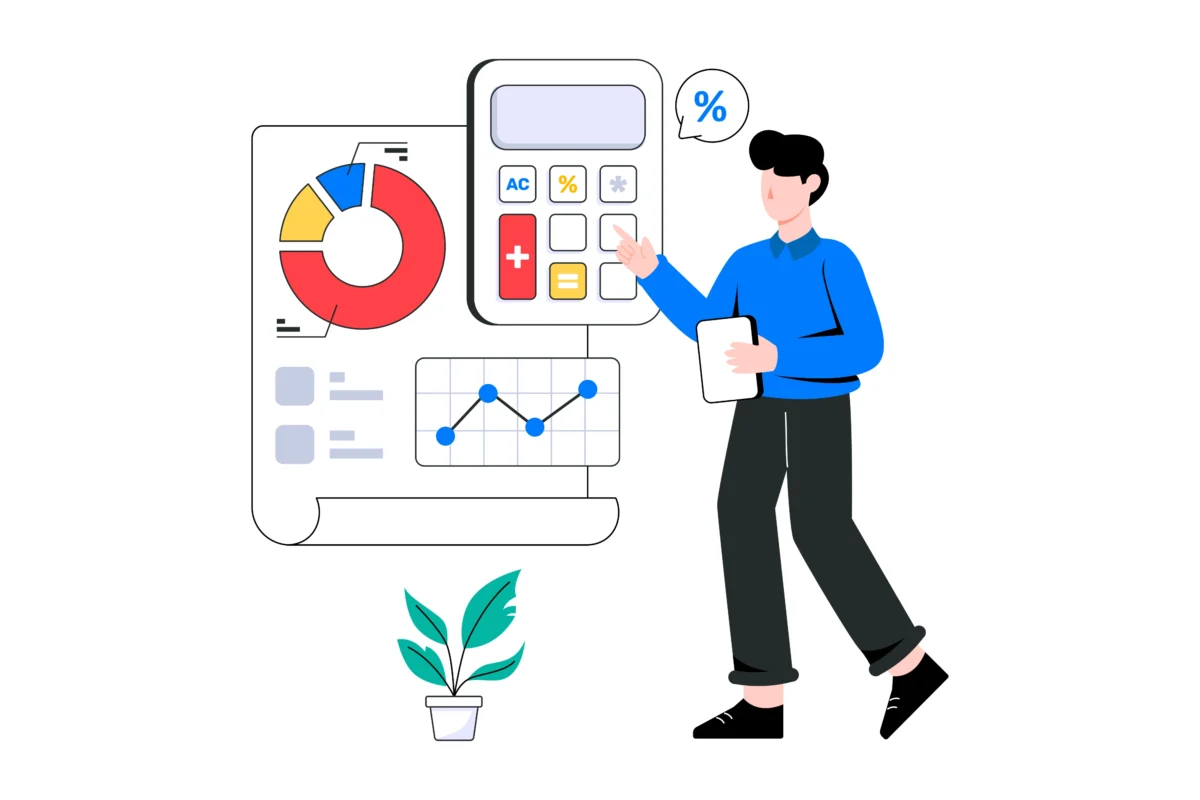
Smart Expense Categorization
Automation assigns categories based on predefined rules. This removes dependency on manual classification.
It ensures uniformity across all expense records.
Historical Data Normalization
Past expense data is cleaned and standardized. This improves the quality of historical datasets used in forecasting.
Better historical data leads to more accurate trend analysis using business cost forecasting tools.
Real-Time Analytics Dashboards
Dashboards provide a clear view of spending patterns. Finance teams can track:
This helps identify anomalies early.
Predictive Expense Insights
Advanced analytics detect patterns in spending behaviour. These insights support better forecasting decisions.
Organizations can anticipate future costs with higher accuracy using budget forecasting tools.
Policy-Based Controls
Expense policies are built into the system. Entries that do not meet rules are flagged or blocked.
This reduces irregular spending and improves data quality.
A structured workflow ensures data consistency at every step:
This process removes manual intervention and reduces errors.
Use Cases Across Business Functions
Finance Teams Gain Control and Accuracy
Finance teams can:
This improves efficiency and forecasting reliability.
Operations Teams Improve Cost Visibility
Operations teams gain insight into spending patterns. This helps:
Leadership Makes Better Strategic Decisions
Leaders rely on accurate forecasts for planning. Clean expense data ensures:
These steps ensure maximum accuracy and system effectiveness.

IVPHUB brings structure and intelligence to expense data by transforming scattered records into a unified, real-time system. It eliminates inconsistencies at the source through automated validation, standardized categorization, and seamless data flow across teams. This allows finance leaders to move from reactive corrections to proactive forecasting.
With IVPHUB, expense data becomes reliable, timely, and analysis-ready, enabling accurate financial projections without the noise of manual errors or delayed inputs.
Eliminates Data Silos Across Teams
IVPHUB centralizes all expense inputs into a single system, removing fragmented tracking across tools.
This ensures every cost is captured once, correctly, and consistently.
Enforces Real-Time Expense Visibility
Expenses are recorded and updated instantly, removing delays in financial reporting.
This keeps forecasts aligned with actual spending patterns at any given moment.
Reduces Manual Errors Through Automation
Automated validation flags duplicates, missing fields, and incorrect entries at submission stage. This prevents inaccurate data from entering forecasting models.
Standardizes Expense Categories Organization-Wide
IVPHUB applies consistent classification rules across all departments. This enables accurate trend analysis and meaningful cost comparisons.
Strengthens Forecast Accuracy with Clean Data
Structured and validated expense data feeds directly into analytics systems. This improves prediction reliability and reduces frequent forecast revisions.
Improves Decision Speed with Actionable Insights
Built-in analytics convert expense data into clear, real-time insights.
Leaders can act faster with confidence backed by accurate financial visibility.
Forecast errors are not caused by poor planning. They are caused by poor data quality.
Inconsistent expense logs create gaps, delays, and inaccuracies. These issues weaken financial forecasts and impact business decisions.
Expense analytics systems bring structure, real-time visibility, and validated data. This improves forecasting accuracy and strengthens financial control.
If inconsistent expense data is impacting your forecasts, it’s time to bring clarity and control into your financial processes with IVPHUB. Reach out to us to see how our platform can simplify expense analytics and help you build accurate, reliable forecasts.
Organizations that invest in structured expense management gain clarity, efficiency, and confidence in their financial planning.
Why do expense logs break forecasts?
Inconsistent logs create gaps, duplicates, and timing mismatches that distort trend analysis.
Forecast models rely on clean inputs, so even small errors compound into large deviations.
What causes inaccurate expense data?
Manual entry, delayed submissions, and lack of standard categories are key drivers.
These issues prevent reliable aggregation and weaken financial insights.
How does real-time expense tracking help?
It ensures every transaction reflects immediately in financial data. This keeps forecasts aligned with actual spending behaviour at all times.
Why is standardization critical in expense data?
Standard categories allow accurate comparison across teams and time periods. Without it, pattern detection and forecasting logic break down.
Can automation fully eliminate expense errors?
Automation removes most manual mistakes by validating and structuring entries instantly.
It also prevents non-compliant or duplicate data from entering the system.
How do delayed expenses affect forecasts?
Late entries shift cost timelines and create false budget assumptions. This leads to gaps between projected and actual financial outcomes.
What role does data validation play in forecasting?
Validation ensures only accurate and complete data feeds forecasting models. This improves prediction reliability and reduces correction cycles.
How do analytics improve expense visibility?
Analytics convert raw expense data into clear trends and insights. This allows faster identification of anomalies and spending patterns.
Why do spreadsheets fail for expense forecasting?
They lack real-time updates, validation controls, and scalability. This results in fragmented data and unreliable financial projections.
How quickly can forecasting accuracy improve?
Accuracy improves as soon as clean, structured data replaces inconsistent logs.
Most organizations see measurable improvement within one reporting cycle.