



Reduce Policy…
Streamline approvals…

Take Control of Project Time Chaos with Timesheet Management system
June 26, 2026
Streamline Follow-Ups Using Automated CRM Alerts and Notifications
July 3, 2026Take Control of Project Time Chaos with Timesheet Management system
June 26, 2026Streamline Follow-Ups Using Automated CRM Alerts and Notifications
July 3, 2026
Remote work has moved from a temporary solution to a permanent business model. Teams now collaborate across cities, countries, and time zones. While this shift offers flexibility and access to global talent, it also creates a serious challenge coordination.
In a physical office, visibility happens naturally. People can walk over to a desk, ask questions, and track progress informally. Remote environments remove that advantage. Without structure, teams struggle with confusion, delays, and missed priorities.
This is where task management becomes essential. It is not just about organizing work. It is about creating clarity, improving communication, and ensuring every team member stays aligned through remote task management practices and structured systems.
Remote teams often face hidden inefficiencies that slow down progress.
Lack of Visibility Across Teams
When work is scattered across emails, chat tools, and spreadsheets, it becomes difficult to track progress. Team members are unsure about priorities, deadlines, or ownership. This lack of visibility leads to delays and duplicated efforts.
Communication Gaps and Misalignment
Remote communication relies heavily on messages. Important details can get lost in long threads. Without structured communication, teams spend more time clarifying tasks than actually completing them.
Weak Accountability Systems
Unclear ownership results in missed deadlines. When tasks are not assigned properly, responsibility becomes shared but not defined. This creates confusion and reduces overall efficiency in remote team management.
Many teams still rely on outdated methods such as spreadsheets, emails, or manual tracking systems. These approaches may work for small teams but break down quickly as operations grow.
Meetings are often used to compensate for this gap. However, excessive meetings reduce productivity and do not provide long-term clarity. Information discussed in meetings is rarely documented in a structured way.
Remote work requires systems, not just communication. Without a centralized workflow, teams operate in silos, leading to inconsistent outcomes and poor remote workflow management.
Task management in remote work is a structured approach to organizing, assigning, and tracking work across teams.
It goes beyond simple to-do lists. A strong task management system includes:
This transforms work from scattered activities into a streamlined process using an online task tracking system that keeps everything connected.
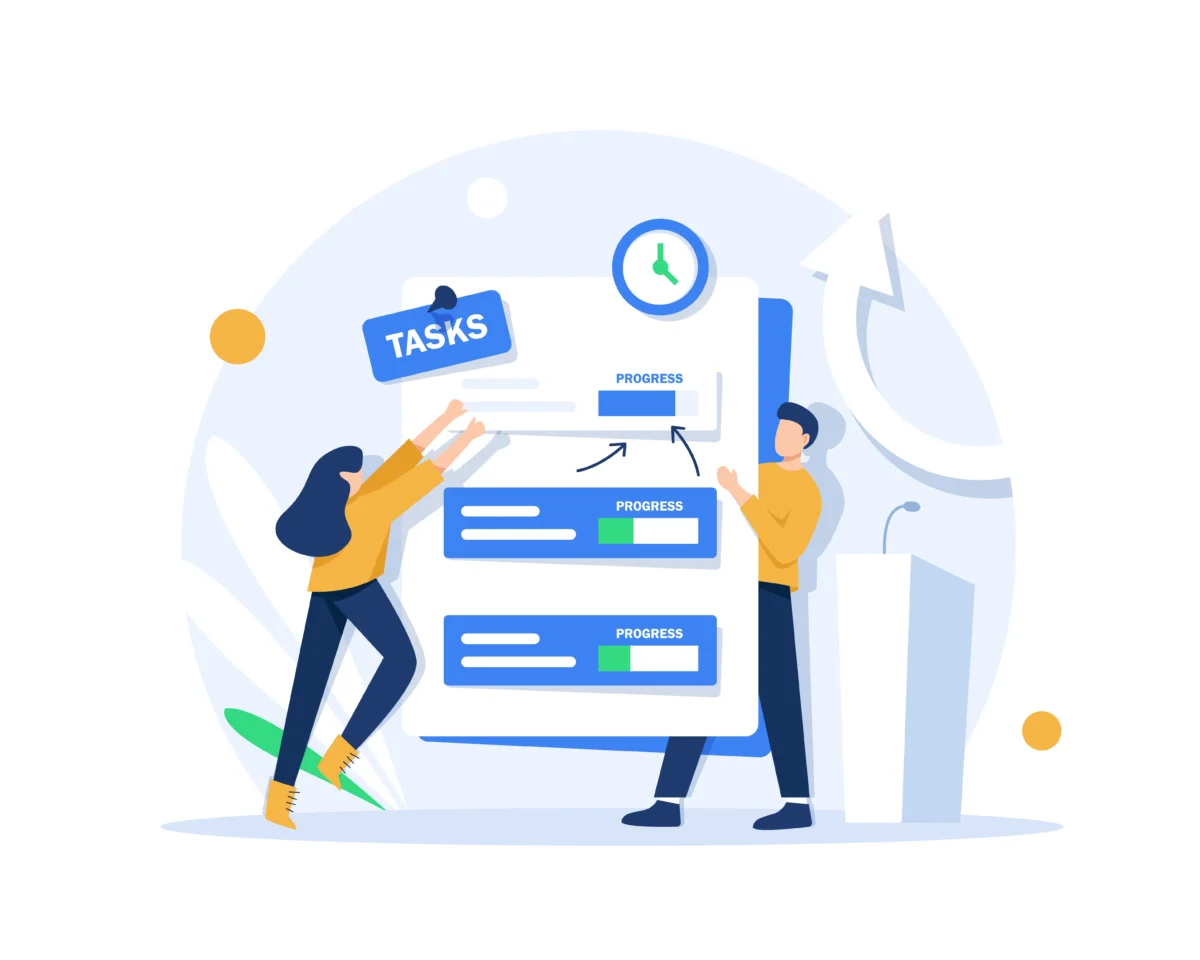
Not all tools are built for remote coordination. The right task management software should include:
Real-Time Collaboration
Team members should be able to update tasks, share feedback, and track progress instantly.
Task Prioritization and Automation
Workflows should allow teams to set priorities and automate repetitive processes within a workflow management system.
Visual Progress Tracking
Dashboards and reports help teams understand performance at a glance.
Seamless Integrations
The software should connect with communication and productivity tools already in use.
Accessibility Across Devices
Remote teams need access from anywhere, whether on desktop or mobile.
Secure Role-Based Access
Sensitive information should be protected with proper permission controls.
Many teams try to manage remote workflows without a proper system. This leads to avoidable mistakes:
These issues reduce efficiency, especially when distributed team management tools are not in place.
When teams implement an effective task management system, the results are measurable.
Increased Productivity
Clear workflows reduce time wasted on confusion and rework.
Faster Project Delivery
Tasks move smoothly from start to completion with minimal delays.
Reduced Operational Costs
Efficient coordination lowers the cost of errors and inefficiencies.
Higher Employee Satisfaction
Employees feel more confident when expectations are clear, especially with proper task management for remote teams.
Better Decision-Making
Real-time data allows leaders to make informed choices.
A well-designed task management software platform acts as the backbone of remote operations.
It centralizes workflows, improves visibility, and ensures accountability across teams. Instead of juggling multiple tools, teams can rely on a single system to manage their work.
With the right software, organizations can:
This creates a more organized and efficient work environment powered by a strong workflow management system.
Startups Scaling Quickly
Fast-growing teams need structure to manage increasing workloads. Task management ensures smooth execution.
Remote Agencies Managing Clients
Agencies handle multiple projects simultaneously. A centralized system keeps everything organized using project task management.
Enterprise Teams Across Locations
Large organizations require coordination across departments and regions. Task management aligns all teams with team coordination tools.
Product Teams Managing Development Cycles
From planning to release, structured workflows improve speed and quality.
Remote work will continue to evolve, and task management will become even more advanced.
Future trends include:
Organizations will increasingly rely on remote task management and smarter remote team management systems to stay competitive.
Remote work will continue to evolve, and task management will become even more advanced.
Future trends include:
Organizations will increasingly rely on remote task management and smarter remote team management systems to stay competitive.

Managing remote teams requires more than coordination it requires a structured system that brings clarity and consistency to everyday workflows. IVPHUB supports this need by providing a centralized environment where teams can organize tasks, track progress, and collaborate without confusion. By combining visibility, automation, and real-time updates, it helps organizations streamline operations, reduce delays, and maintain productivity across distributed teams without relying on scattered tools.
Centralized Task Visibility
All tasks, updates, and priorities are organized in one place, making it easier for teams to stay aligned. This eliminates confusion caused by scattered communication and disconnected tools.
Clear Ownership and Accountability
Tasks are assigned with defined responsibilities and deadlines, ensuring that every team member knows what is expected. This improves accountability and keeps projects on track.
Smart Workflow Automation
Repetitive processes are simplified through automation. Tasks can move through different stages without manual intervention, saving time and improving efficiency.
Real-Time Tracking and Updates
Teams can monitor progress instantly with live updates. This reduces the need for constant check-ins and keeps everyone informed.
Improved Communication and Collaboration
Discussions stay connected to specific tasks, helping teams maintain context and avoid miscommunication. This leads to more focused and productive collaboration.
Workload Management and Balance
Task distribution becomes more efficient with better visibility into team capacity. This helps prevent overload and ensures balanced productivity.
Notifications and Alerts
Automated reminders keep deadlines visible and ensure that no important update is missed, improving responsiveness across teams.
Data-Driven Insights and Reporting
Built-in reporting tools provide valuable insights into performance, helping teams identify gaps and improve workflows over time.
Remote work is no longer an experiment. It is the foundation of modern business operations. However, without proper coordination, even the most talented teams struggle to perform.
Task management provides the structure needed to succeed. It brings clarity, accountability, and efficiency into everyday workflows.
Teams that invest in the right system do not just manage work better they unlock their full potential using modern remote workflow management and scalable online task tracking system solutions.
Bring structure and visibility to your remote operations with a smarter approach. Connect with us by filling out the form, and we’ll connect you with the right solution.
If your team is facing challenges with coordination, productivity, or visibility, it is time to move beyond manual processes and adopt a smarter approach to managing work.
Task management in remote teams is a structured system to assign, track, and complete work with full visibility. It ensures clarity, accountability, and alignment without physical interaction.
Remote teams lack real-time visibility and informal communication, which creates gaps in alignment. Without structure, tasks become fragmented and harder to track.
It centralizes tasks, defines ownership, and tracks progress in real time. This reduces confusion and keeps every team member aligned on priorities.
Teams experience missed deadlines, unclear responsibilities, and scattered communication. This leads to inefficiencies and reduced productivity.
Assigning tasks with deadlines makes responsibility visible and measurable. This ensures individuals stay committed and work progresses without delays.
Key features include task assignment, real-time tracking, workflow automation, and reporting dashboards. These elements ensure efficient coordination and execution.
It keeps all updates, comments, and progress within tasks. This minimizes the need for frequent check-ins and long discussions.
Yes, it eliminates confusion, streamlines workflows, and optimizes workload distribution. This allows teams to focus more on execution than coordination.
Structured workflows standardize processes and reduce manual effort. This ensures consistency and faster task completion across teams.
A centralized system keeps all tasks, communication, and data in one place. This improves visibility, reduces errors, and enhances overall team performance.